Growing Digital Plants
🌱 Motivation
Digital 3D spaces have exploded in that past few years from AR/VR to notions of the *metaverse*.
However, these virtual/augmented scenes need to be populated with 3D assets that look good! Lots and lots of them, in fact.
I wanted to create exactly that, but with a little twist—what if said assets could respond to the observer?
I turned to growing digital plants that respond to user behavior.
Virtual spaces can feel all too impersonal and empty , and adding dynamic greenery puts some of that life back in.
Role
Independent Researcher
Timeline
Winter 2021 - Spring 2022
Tools
Javascript
WebGL
👨🌾 Methodology
When I first conceived this research project, I knew I wanted to use procedural techniques to generate the plant geometry.
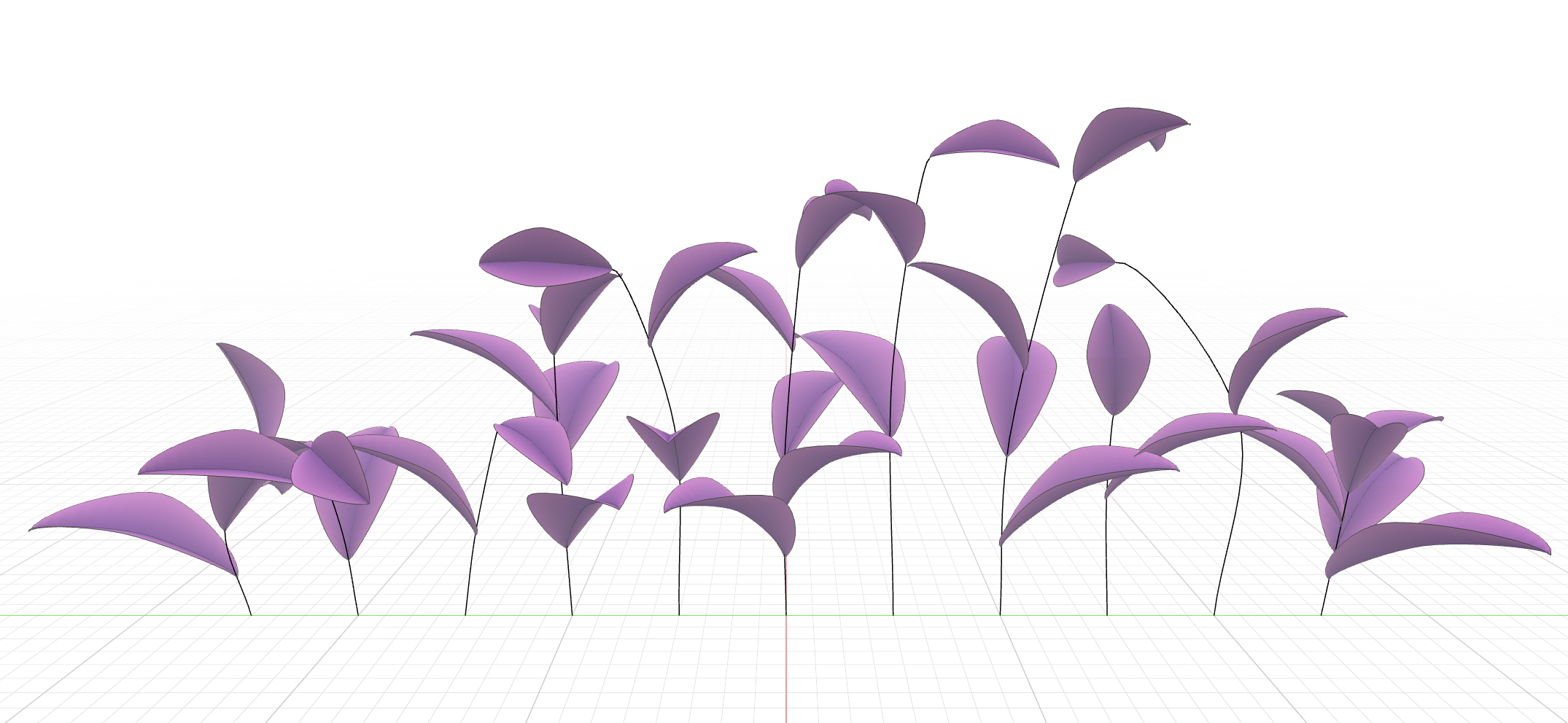
I brainstormed a list of parameters I wanted to parameterize: leaf shape, leaf size, leaf curvature, stem length, stem curvature, and colors.
I designed the plant "function" off these inputs, using an old geometry kernel I coded up with geometric curve operations.
Upon generation, the plants are displayed in the browser—three.js is sure powerful!
To add responsiveness, all I needed to do was map behavior metrics to different parameters of the plant function. Using procedural techniques sure paid off. The metrics I decided to use were cursor variance, user position variance, and time of day. These potentially reflect a variety of emotions, from relaxation to anxiety, and an environment that validates or conflicts these feelings can, perhaps,make digital spaces feel sentient and personal . Affective computing is pretty cool, n'est-ce pas?
To add responsiveness, all I needed to do was map behavior metrics to different parameters of the plant function. Using procedural techniques sure paid off. The metrics I decided to use were cursor variance, user position variance, and time of day. These potentially reflect a variety of emotions, from relaxation to anxiety, and an environment that validates or conflicts these feelings can, perhaps,
🌿 Retrospective
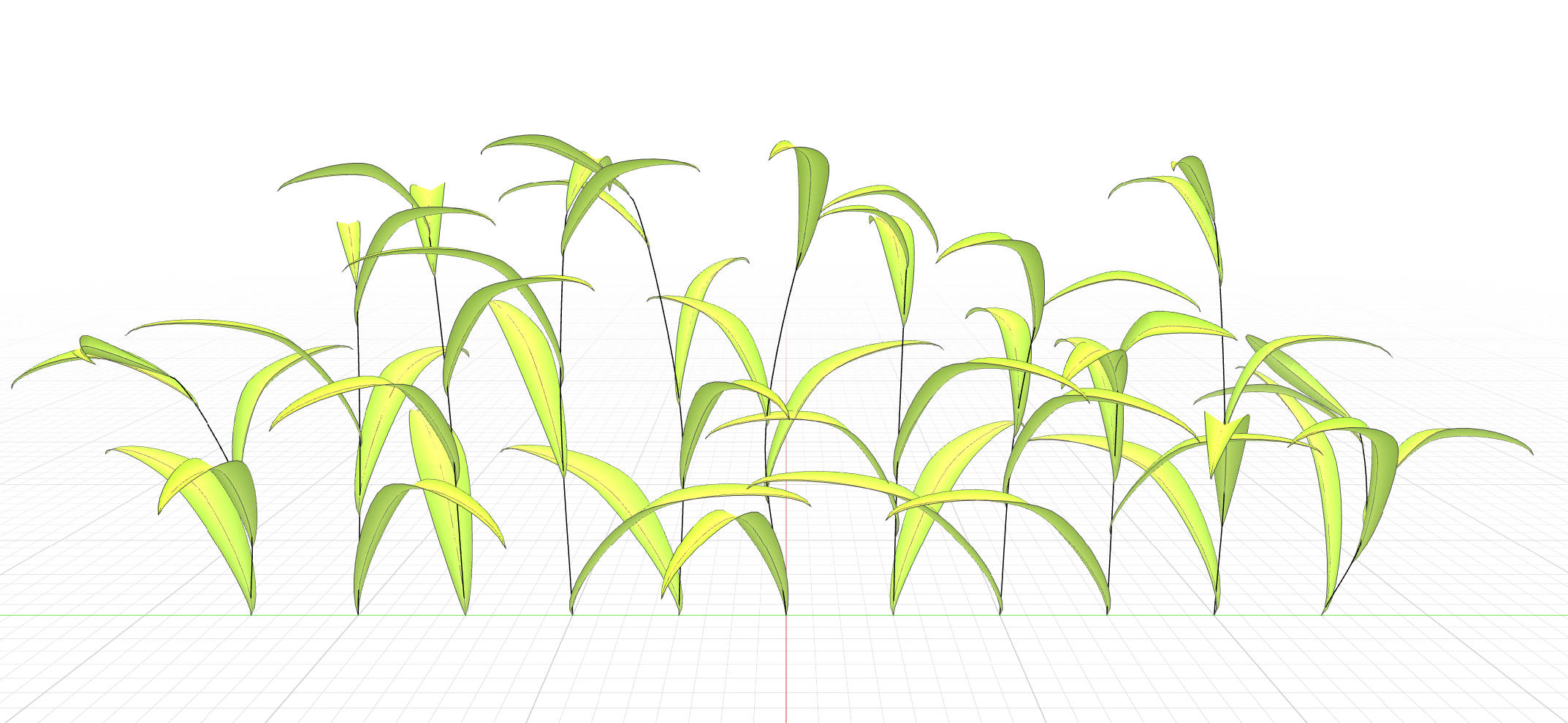
I'm quite satisfied with the wide variety of grasses the system can create.
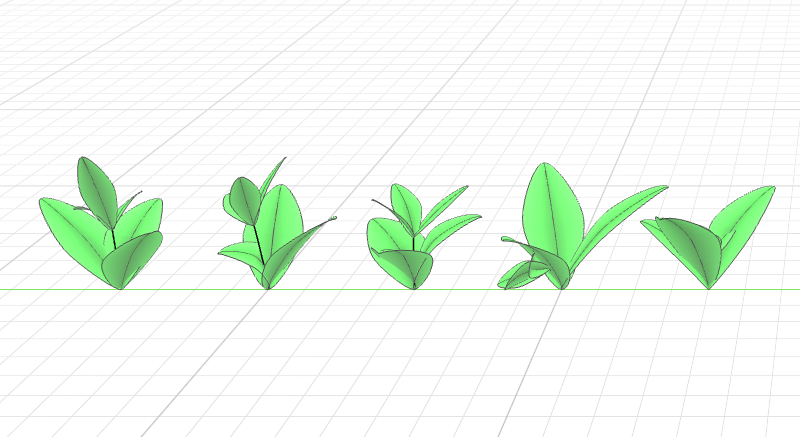
In the future, I'd like to augment my generative plant function with branching behavior and stem/branch thickness
so a wider variety of shrubs and trees can be grown. I would also incorporate more color theory into
the behavior-to-parameter mappings to heighten the user's sense of interacting with an emotional system .
Perhaps simulating water and nutrient transport (with pressure gradients and all that good jazz) can lead to higher detail and accuracy within the 3D models.
From auxins to pigments to morphological processes, I'd love to explore the biological side of plant growth too!